When it comes to choosing window coverings, many people find themselves caught in a dilemma: how to keep their space bright while ensuring privacy. The great news is that you don’t have to sacrifice one for the other. With the right window treatments, you can bask in natural light, maintain an elegant look, and enjoy the seclusion you desire—all without resorting to heavy blackout curtains unless you truly want them.
Picture this scenario: You’ve just moved into a beautiful home with large windows that flood your living room with gorgeous natural light. However, your house sits close to a busy sidewalk, and you notice neighbors and passersby can easily see into your space during the day. At night, when your lights are on, the visibility becomes even more pronounced. This common situation doesn’t mean you need to live in darkness or compromise your home’s aesthetic appeal.
In this comprehensive guide, we’ll explore stylish and practical options for bedrooms, bathrooms, and street-facing windows. We’ll also provide expert tips on light control, materials, and smart features so you can find the perfect solution for your home or business. Whether you’re dealing with a ground-floor apartment in an urban setting, a suburban home with close neighbors, or a commercial space that needs flexible privacy options, there’s a solution that will meet your needs.
Why Privacy Doesn’t Have to Mean Dark Rooms
Often, privacy solutions are seen merely as ways to block out light. However, privacy is more nuanced than that. The best treatments:
- Reduce or eliminate direct sight lines from outside
- Allow comfortable, glare-free daylight to fill your space
- Complement your interior design
- Adapt to varying needs throughout the day
The key is to select materials and designs that diffuse or redirect light rather than completely shutting it off. Consider using layered fabrics, adjustable louvers, and shades that let you control what you see and what others can see in.
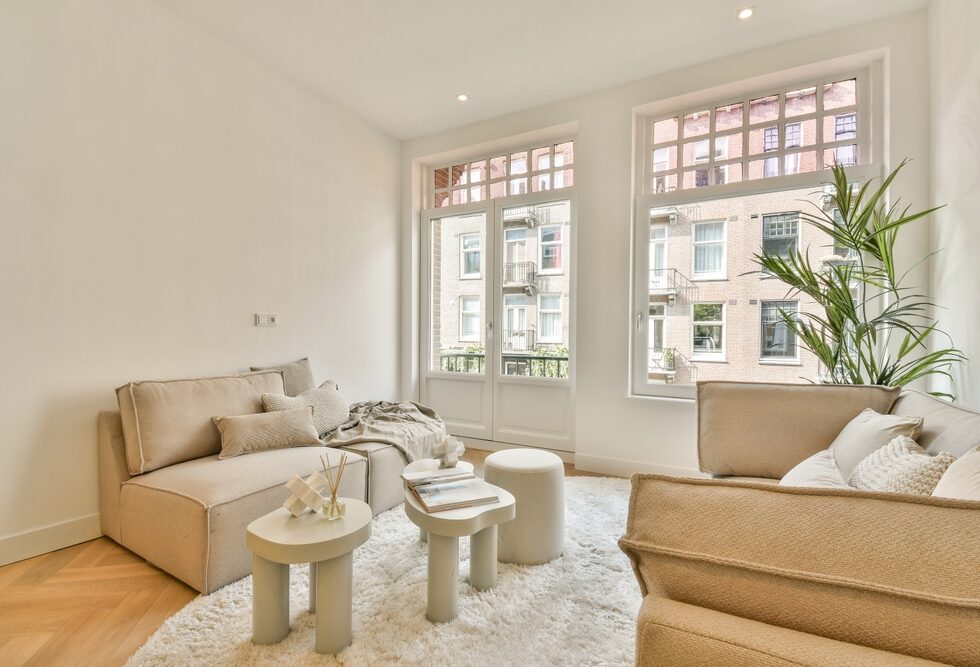
Think about the difference between a frosted glass shower door and a clear one. The frosted glass still allows light to pass through while providing complete visual privacy. The same principle applies to window treatments. Modern privacy solutions work by breaking up sight lines, diffusing light, or creating visual barriers at specific heights while maintaining the bright, airy feeling you want in your home.
For example, imagine you’re working from home in your living room, which faces a busy street. Traditional heavy curtains would block out all the natural light, making your workspace feel closed off and requiring artificial lighting during the day. However, a well-designed privacy solution might use light-filtering cellular shades that obscure the view from outside while still allowing soft, diffused daylight to illuminate your workspace naturally.
Defining Your Privacy Needs by Room
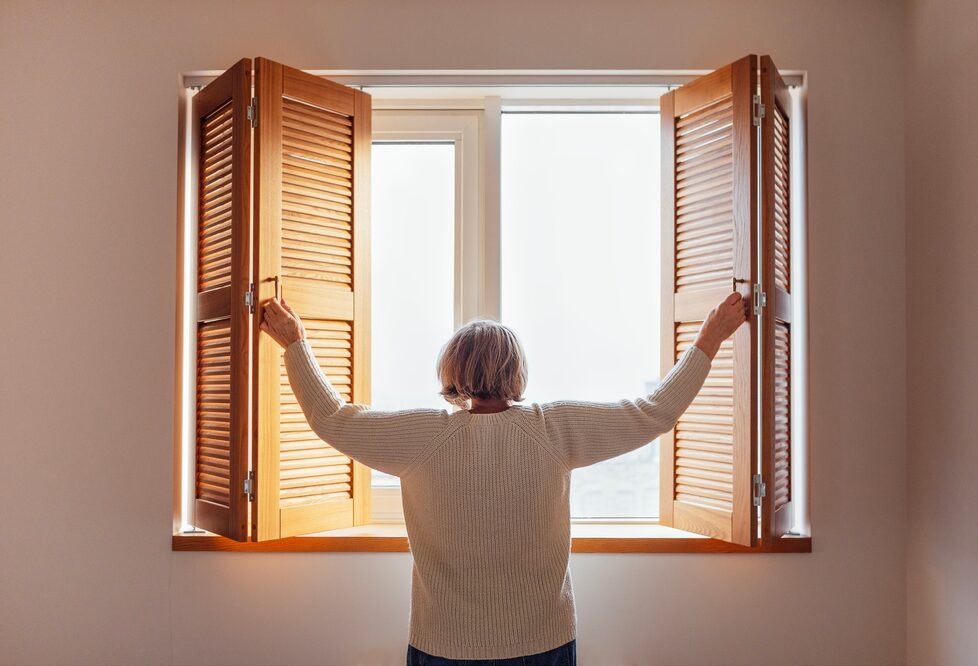
Before diving into fabrics or finishes, it’s essential to clarify your needs for each room. Different spaces in your home have varying privacy requirements based on their function, the time of day they’re most used, and their location within your home.
Bedrooms: Nighttime privacy is crucial, but so is the ability to wake up naturally with gentle morning light. Many people prefer room-darkening or blackout options for sleep, with the ability to let in soft daylight during the day. Consider a master bedroom that faces east—you might want to block the harsh morning sun for sleeping in on weekends, but still enjoy natural light when getting dressed or reading during the day. A guest bedroom might need flexible options since different visitors have varying light preferences.
Bathrooms: Privacy is important both day and night, especially for ground-floor or street-facing bathrooms. Look for moisture-resistant materials that are easy to clean and won’t warp in humid conditions. A bathroom window might need to provide privacy while still allowing natural light for daily grooming tasks. Consider a scenario where your bathroom window faces a neighbor’s kitchen window—you need consistent privacy while still maintaining the bright, clean feeling that natural light provides.
Street-facing Living Rooms: Daytime privacy is vital, especially in busy areas or urban environments. The aim is to obscure views while keeping the space bright and open for entertaining and daily activities. Picture a living room with large windows facing a sidewalk or neighboring homes. During evening gatherings, you want privacy from outside observers, but during the day, you want to maintain the open, welcoming atmosphere that natural light creates.
Home Offices: Reducing glare on computer screens is important without making the space feel closed off. Adjustable light control is beneficial throughout the day as the sun’s angle changes. Consider how the afternoon sun might create glare on your monitor, requiring you to adjust your window treatments multiple times throughout the workday.
Commercial Spaces: In places like conference rooms or storefronts, you may need privacy on demand—clear views one moment, complete discretion the next. A conference room might need to transition from an open, welcoming space for casual meetings to a private environment for sensitive discussions.
Understanding your priorities for each room and the direction of your windows will help you choose a solution that meets your needs without compromising style. Take note of when privacy is most critical in each space and how the natural light changes throughout the day.
The Best Window Treatments for Privacy: A Quick Overview
Here are some top choices for stylish privacy solutions:
Top-Down/Bottom-Up Shades: These versatile shades can be lowered from the top or raised from the bottom, allowing you to keep views out of sight while letting daylight in. They’re perfect for situations where you want to maintain privacy at eye level while still enjoying natural light from above.
Layered Roller Shades (Zebra/Dual): With alternating sheer and opaque bands, these shades let you adjust privacy throughout the day. The innovative design allows you to align the bands for maximum privacy or offset them for filtered light and partial views.
Plantation Shutters: These elegant shutters feature adjustable louvers that provide both style and privacy. The angled slats can be adjusted to direct light upward while blocking street-level views.
Roman Shades with Liners: These shades offer a sophisticated look while providing robust day-to-night coverage. The soft fabric folds create an elegant appearance that works well with both traditional and contemporary décor.
Cellular (Honeycomb) Shades: Known for excellent light diffusion and energy efficiency, these shades keep your space comfortable while providing privacy through their unique cellular structure.
Woven Wood Shades with Liners: These add a natural texture and can provide privacy as needed. The organic materials bring warmth to a space while the optional liners add privacy without sacrificing style.
Sheer Shades: Perfect for daytime privacy, these shades allow gentle light to filter in while obscuring views from outside during daylight hours.
Let’s take a closer look at how these options work in real-life spaces and specific scenarios you might encounter in your home.
Best Window Treatments for Privacy by Room
No matter your style—be it modern, transitional, or classic—there’s a privacy-forward option that will enhance your décor. Here are some of the most effective and versatile choices, with detailed explanations of how they work in practice.
Top-Down/Bottom-Up Shades: Privacy That Still Feels Open
How they work: These innovative shades feature two separate operating systems that allow you to lower the shade from the top or raise it from the bottom, creating a “daylight zone” above eye level while shielding the lower part of your window. This creates a privacy barrier where you need it most while maintaining access to natural light.
Real-world example: Consider a bedroom with windows facing a neighbor’s house. During the day, you can lower the shade from the top to cover the lower two-thirds of the window, preventing neighbors from seeing in while still allowing natural light to enter through the upper portion.
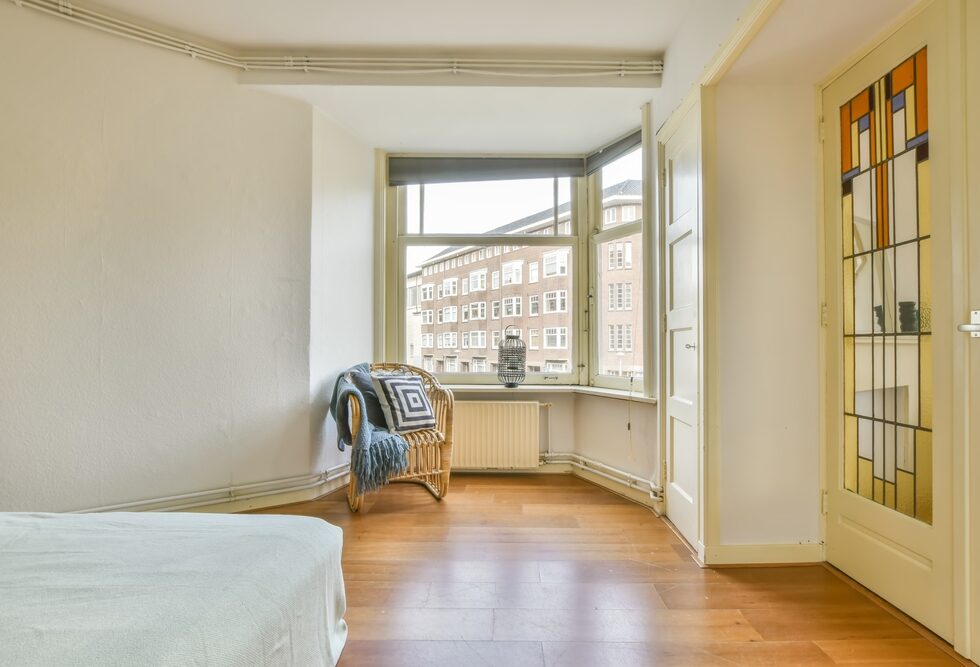
At night, you can fully lower the shade for complete privacy, or if you prefer some ambient light, maintain the partial coverage.
Why they’re great:
- Bedrooms: Keep the lower half covered at night for privacy, and during the day, lower from the top to let in natural light without exposing your space. This is particularly useful for bedrooms where you might be changing clothes or want privacy while still enjoying morning light.
- Bathrooms: Maintain privacy while allowing daylight near the ceiling, especially helpful for street-level bathrooms where passersby might otherwise see in.
- Home Offices: Reduce glare on screens while keeping the ambiance bright. You can position the shade to block direct sunlight on your computer screen while maintaining overall room brightness.
Installation considerations: These shades work best when mounted inside the window frame for a clean look, but outside mounting can provide better light control and privacy coverage.
Style notes: Choose a clean, minimalist headrail for a modern look or a fabric-wrapped rail for a softer finish. Opting for cordless operation enhances safety and aesthetics while making daily adjustments effortless.
Layered Roller Shades (Zebra/Dual): Day-to-Night Precision
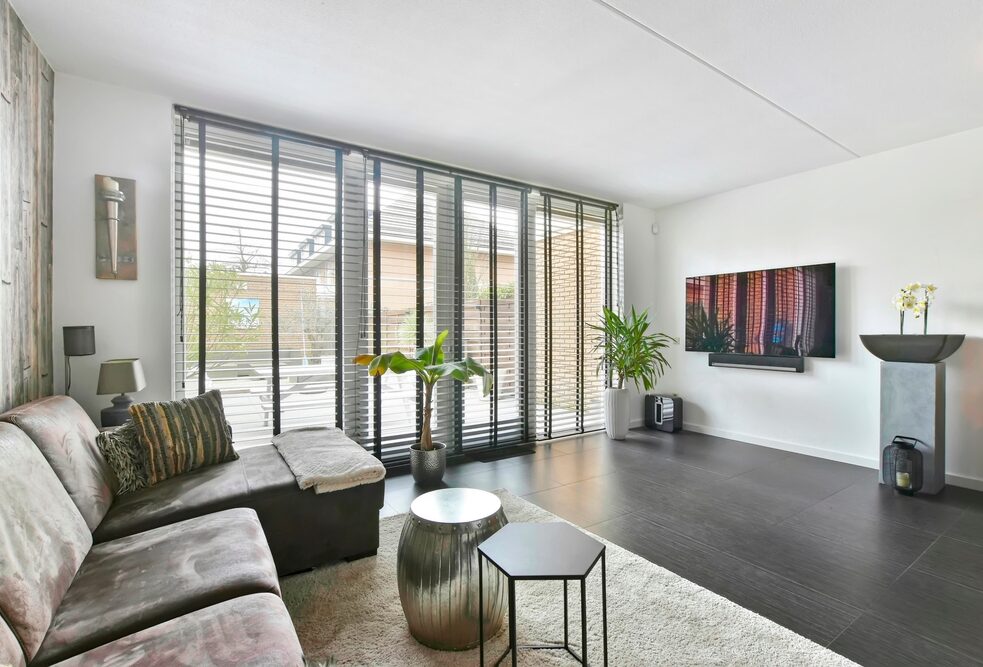
How they work: These innovative shades feature two layers of fabric with alternating sheer and opaque bands that move past each other. When the opaque bands align, you get maximum privacy. When they’re offset, the sheer bands allow filtered light while still providing some privacy.
Step-by-step operation: Start with the shade fully raised for maximum light and view. As the day progresses and you need more privacy, lower the shade and adjust the bands. For daytime privacy with light, align the sheer bands. For evening privacy, align the opaque bands. For complete privacy, fully close the shade.
Why they’re great:
- Street-facing Living Rooms: During busy daytime hours, you can adjust to a slightly open configuration for a view out while diffusing the view in. In the evening when interior lights make your home more visible from outside, close the bands for full privacy.
- Offices and Studios: Fine-tune light throughout the day to limit glare without making the space dark. As the sun moves across the sky, you can make micro-adjustments to maintain optimal lighting conditions.
- Modern Interiors: Their crisp lines and slim profile suit contemporary spaces perfectly, offering high-tech functionality with minimalist aesthetics.
Real-world scenario: In a home office facing west, morning light isn’t an issue, so you can keep the shades open. As afternoon approaches and the sun becomes more direct, you can adjust the bands to filter the light and reduce glare. By evening, when you want privacy from neighbors, you can align the opaque bands for complete visual privacy while still allowing some ambient light.
Style notes: Available in a wide range of neutrals and textures, from ultra-sheer to nearly opaque bands. Minimal cassette valances create a sleek, built-in look that works particularly well in contemporary settings.
Plantation Shutters: Architectural Style That Works Hard
How they work: These hinged panels feature adjustable louvers that can be tilted to deflect sight lines while allowing daylight in. The angle of the louvers determines both the amount of light and the level of privacy.
Privacy mechanics: When louvers are angled upward, they block views from street level while directing natural light toward the ceiling, creating ambient illumination. When angled downward, they can block views from above while still allowing some light filtration.
Why they’re great:
- Timeless Appeal: Shutters add significant value to your home and provide a tailored, architectural appearance that works with virtually any décor style.
- Precise Control: Angle the louvers to bring light in while blocking views from the street. You can adjust them throughout the day as lighting conditions change.
- Durability: Composite and faux-wood materials withstand humidity and daily use, making them ideal for bathrooms, kitchens, and high-traffic areas.
Best rooms: Ideal for living areas and bedrooms, as well as bathrooms, laundry rooms, and kitchens with moisture-resistant options.
Installation example: In a dining room with large windows facing the street, shutters can be adjusted during dinner parties to provide privacy while maintaining enough light to create ambiance. During the day, they can be opened to welcome natural light while still providing some privacy screening.
Style notes: The size of the louvers affects the overall look—wider louvers (3.5″ to 4.5″) feel more modern and allow more light, while narrower ones (2.5″ to 3.5″) lean traditional. You can color-match your shutters to your trim for a seamless look or choose a contrasting shade for added visual depth.
More Stylish Privacy Solutions to Consider
Roman Shades with Privacy or Blackout Liners
Roman shades offer a sophisticated, tailored appearance that works beautifully in both traditional and contemporary settings. The key to their privacy effectiveness lies in the liner selection and mounting approach.
How they enhance privacy: The soft fabric folds create visual interest while the liner provides the privacy function. During the day, a privacy liner prevents silhouettes from showing through the fabric, while a blackout liner provides complete light and privacy control.
Practical applications:
- Tailored folds or flat options provide a custom appearance that can be coordinated with other soft furnishings in the room.
- A privacy liner prevents silhouettes from showing in the evening while still filtering daylight beautifully during the day.
- For bedrooms, a blackout liner combines beautiful design with sleep-friendly darkness, perfect for shift workers or anyone sensitive to light.
- In bathrooms or kitchens, consider water-resistant fabrics or easy-to-clean materials that can withstand moisture and occasional splashing.
Design flexibility: Roman shades can be made from virtually any fabric, allowing you to coordinate with your existing décor or create a focal point with a bold pattern or rich texture.
Cellular (Honeycomb) Shades: Privacy with Energy Savings
The unique cellular structure of these shades provides multiple benefits beyond privacy, making them an excellent choice for energy-conscious homeowners.
How the cellular structure works: The honeycomb design traps air in pockets, creating insulation that helps regulate room temperature while diffusing light for privacy.
Privacy and efficiency benefits:
- The unique cellular structure traps air, helping to insulate windows and reduce energy costs.
- Light-filtering cells diffuse views from outside while maintaining a soft, natural glow inside.
- Excellent for bedrooms, nurseries, and home offices where comfort and sound dampening are additional benefits.
- Available in single- or double-cell constructions, with double-cell providing superior insulation and privacy.
Special features: Many cellular shades offer top-down/bottom-up functionality, combining the energy benefits with flexible privacy control.
Woven Wood Shades with Optional Liners
These natural fiber shades bring organic texture and warmth to any space while offering flexible privacy options.
Natural appeal: Made from sustainable materials like bamboo, reeds, or grasses, these shades create a relaxed, organic atmosphere.
Privacy customization:
- They look beautiful during the day, creating a relaxed, natural vibe, and you can add a liner for nighttime privacy.
- Privacy liners can be added or removed seasonally, giving you flexibility as your needs change.
- Pair them with drapery panels to enhance the layered look and add depth to your window treatment design.
Room-specific applications: Particularly effective in casual living spaces, bedrooms, and dining areas where you want to maintain a connection to nature while controlling privacy.
Sheer Shades: Daytime Discretion, Soft Light
Sheer shades represent the perfect balance between privacy and light filtration for daytime use.
How they work: These shades combine the softness of fabric with the functionality of blinds, featuring fabric vanes that can be adjusted to control light and privacy levels.
Best applications:
- Excellent daytime privacy and light diffusion, perfect for living areas and dining rooms.
- For complete evening privacy, pair them with drapery or layer them with a roller shade.
- Ideal for spaces where you want to maintain a soft, elegant appearance while ensuring daytime privacy.
Choosing Opacity, Liners, and Materials
Your choice of fabric opacity is crucial for achieving the desired level of privacy, and understanding the differences can help you make the best selection for each room.
Opacity levels explained:
- Sheer (1-25% opacity): Allows the most light in; provides minimal daytime privacy and is primarily decorative. Best for spaces where privacy isn’t a major concern but you want to soften harsh sunlight.
- Light-filtering (25-75% opacity): Diffuses light and blurs shapes from outside; provides good daytime privacy but may need an added layer at night when interior lights are on.
- Room-darkening (75-95% opacity): Significantly reduces light; provides strong nighttime privacy and is excellent for bedrooms and media rooms.
- Blackout (95-100% opacity): Offers maximum light blockage and privacy; ideal for bedrooms, nurseries, and media rooms where complete darkness is desired.
Liner options: Many shades can be fitted with privacy liners to enhance coverage without changing the decorative fabric. If you love a particular fabric but are concerned about nighttime silhouettes, a liner is an excellent solution that provides flexibility.
Material considerations for different environments:
- High-moisture areas: For bathrooms, kitchens, and laundry rooms, consider composite shutters, faux wood blinds, or moisture-resistant fabrics to prevent warping, mold, and mildew.
- Easy maintenance: Smooth composite surfaces are simple to clean with just a damp cloth, making them ideal for busy households or commercial applications.
- UV protection: Look for fabrics with high UV ratings to protect interior furnishings and reduce fading while maintaining privacy. This is particularly important for south and west-facing windows.
- Durability: In high-traffic areas or homes with children and pets, choose materials that can withstand frequent use and occasional rough handling.
Mounting Strategies That Boost Privacy
How you install your window treatments can significantly impact their privacy effectiveness, and the mounting method you choose can make the difference between adequate and excellent privacy control.
Inside Mount: This method fits the treatment within the window frame for a clean, built-in appearance. It works best when you have adequate depth in your window frame (typically at least 2-3 inches). However, precise measurements are essential to avoid light gaps around the edges. Inside mounting works well when your window trim is decorative and you want to showcase it.
Outside Mount: This approach overlaps the window opening, helping to cover wider areas and reduce side light gaps. It’s especially useful for street-facing windows, shallow frames, or when maximum privacy is essential. Outside mounting can make windows appear larger and provides better light control overall.
Extended outside mounting: For maximum privacy, consider extending the mount 3-6 inches beyond the window frame on all sides. This approach virtually eliminates light gaps and provides superior privacy control.
Side Channels or Light Blockers: For roller or cellular shades, side channels can minimize light gaps—ideal for bedrooms, media rooms, or any space where light leakage is a concern. These channels guide the shade fabric and create a seal against the window frame.
An in-home consultation can help determine the best approach for your specific windows, trim design, and privacy requirements.
Smart Controls and Automation
Modern technology has revolutionized window treatment operation, making privacy control more convenient and effective than ever before.
Automated privacy scheduling: Program your shades to automatically adjust throughout the day. For example, schedule shades to lower at sunset for automatic evening privacy, ensuring your home is protected even when you’re not there to manually adjust them.
Remote and app control: Control hard-to-reach windows with ease using remote controls or smartphone apps. This is particularly valuable for tall windows, skylights, or treatments installed above furniture.
Voice activation and scene control: Integration with smart home systems allows you to manage multiple rooms at once. Create scenes like “Good Morning” that raises bedroom shades gradually, or “Movie Time” that lowers living room shades and dims lights simultaneously.
Safety benefits: Cordless and motorized options improve safety by eliminating dangling cords, making them ideal for homes with children and pets.
Energy integration: Smart shades can work with your home’s heating and cooling system, automatically adjusting to help maintain comfortable temperatures and reduce energy costs.
Layering: The Designer Trick for Day-to-Night Coverage
Professional designers often use layering to create window treatments that are both beautiful and highly functional. This approach combines multiple treatments to address different privacy and light control needs throughout the day.
Classic layering combinations:
- Sheer shades with drapery panels: The sheer shade provides daytime privacy and light filtering, while drapery panels can be drawn for complete evening privacy and added insulation.
- Cellular shades with valances: Combine the energy efficiency and privacy of cellular shades with decorative valances that add style and help block light gaps at the top of the window.
- Plantation shutters with curtains: Use shutters for daily privacy and light control, with curtains that can be drawn for additional privacy, light blocking, or seasonal décor changes.
Functional benefits of layering:
- Seasonal flexibility: Adjust your privacy level based on changing daylight hours and seasonal needs.
- Enhanced insulation: Multiple layers provide better temperature control and energy efficiency.
- Style versatility: Change the look of your room by adjusting different layers without replacing the entire treatment.
- Improved light control: Fine-tune natural light throughout the day using different combinations of your layered treatments.
Conclusion
The right window treatments let you enjoy natural light and maintain privacy—no compromises needed. With options like top-down/bottom-up shades, layered rollers, shutters, and cellular designs, you can tailor each room for comfort, style, and control. By choosing the right opacity, materials, and smart features, you create solutions that work day and night.
Whether it’s a bedroom, living room, office, or storefront, the perfect window treatment can brighten your space, protect your privacy, and elevate your décor with ease.